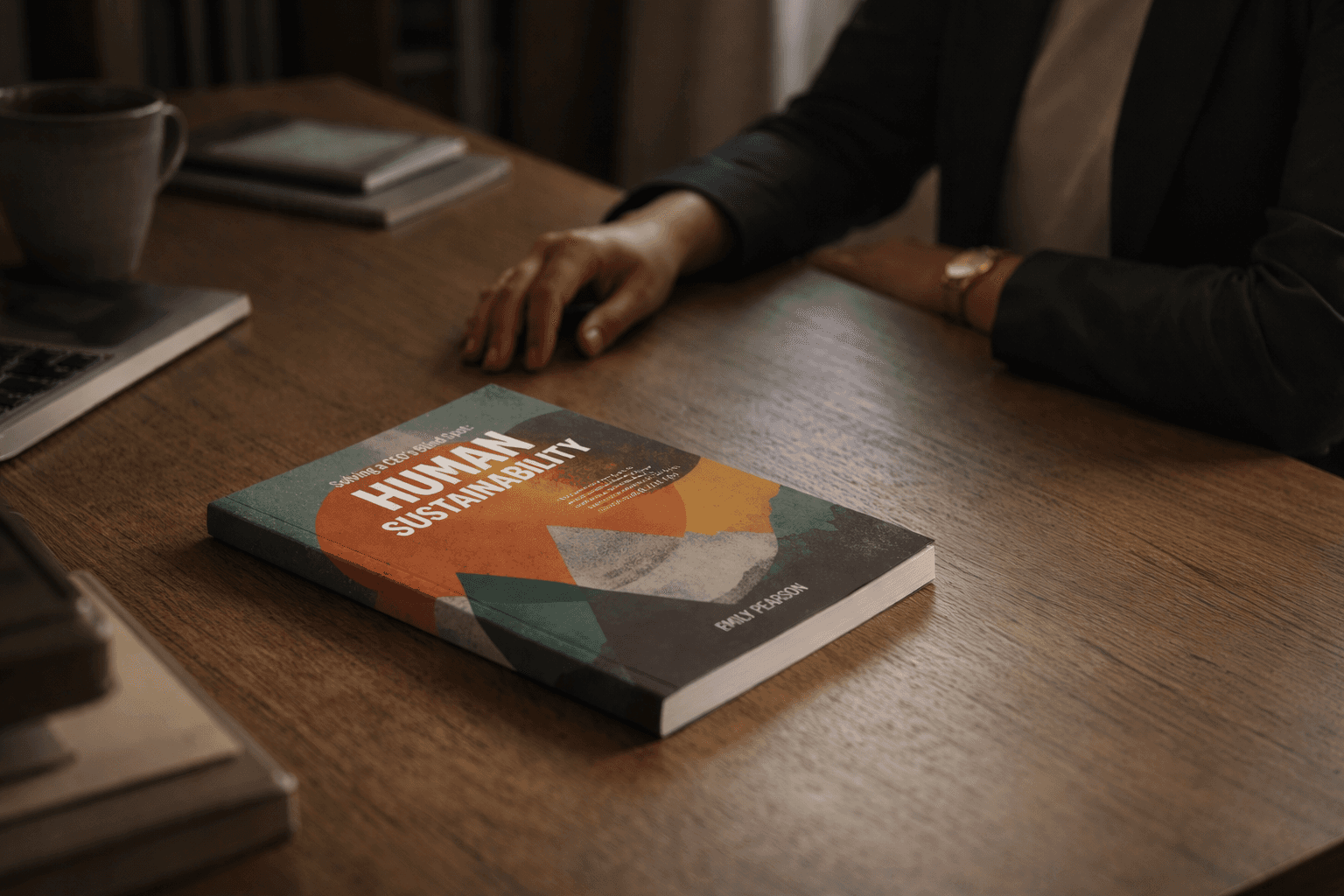
“I’m going to die.”
My skin was clammy, chalk-white, as I hung over the toilet bowl. My body felt like lead. I was projectile vomiting for the third time in five minutes. Snickers bars and Rib ’n’ Saucy Nik Naks – the only lunch I could afford – hit the water and splashed back into my face.
The bathroom stank of stale cannabis. Second-hand smoke drifted in from the living room. Another bong got passed around. My nostrils stung. I heaved again.
This is what an epic whitey looks like.
I was seventeen. Not in education, employment, or training: a NEET.
Living alone in a flat in a Northeast ex-mining village, surviving on benefits and meal tickets. I was a statistic – a NEET – a young girl who slipped through every net, somehow convincing the world I was fine when I was anything but.
Years later, at forty-five, I’d find myself in the exact same position – heaving over a toilet in another pit village. But this time, I was a wellbeing entrepreneur. Three-bedroom new build, married, with a Mercedes on the drive. Three years into a ketamine addiction after spending my career building the very systems I didn’t have growing up.
But that’s another chapter, The Economics of Thriving (Chapter 4).
A Childhood Without Nets
Back in my teens, there were no teachers calling home. No youth worker reaching in. Just me and a pack of lads who didn’t fit in either. We spent most days smoking weed, playing the nick, dodging the things that hurt. It felt like great fun back then. It also felt normal. The kids who didn’t seem like everyone else were the academic ones. The top-of-the-class types who weren’t allowed to wander the streets at night. The homework-doers. The revisers. The ones living a life I wasn’t expected, or pressured, to live.
There was no structure. No safety net. And no roadmap out for me. I was brought up by baby-boomer parents with their own undiagnosed and untreated problems – raised themselves by parents who fought and survived World War II. Parenting was different in the ’70s and ’80s.
A Mother Missing, A Father Away
I don’t have many memories of my mam from childhood. My experience was that she was distant, kept me at arm’s length. I don’t remember physical affection or ever hearing her say she loved me.
I always felt she favoured my younger sister and older half-sister. Mam worked three jobs – cook at the local secondary school, cleaner for an elderly neighbour once a week, and barmaid in the village pub on weekends. I suppose that explains the distance. She often wasn’t around.
And when she was, there was no emotional connection.
No nurturing.
No warmth.
But I do remember the handprints across my legs – though I couldn’t tell you what I’d done wrong. Being hit with a stick for standing at the top of the street with a boy. The slap across my face when I came home late as a teenager, on holiday in my nana and grandad’s caravan in Whitby, after enjoying myself far too much at the fair on the pier. My older half-sister would laugh about this for years after.
I also remember the good bits – the domestic rhythms that made her Mam. There was always food. She could cook and bake: spag bol on weeknights, and on Sundays the kitchen transformed into her baking day – quiche, corned beef pie, and a ham broth with dumplings simmering away in the pressure cooker, the windows steamed opaque as those delicious smells drifted into the living room.
Christmases too: matching pyjamas with my little sis, presents stacked around the tree, the smell of sulphur from pulled crackers mingling with sage-and-onion stuffing.
And I remember her being with me when I gave birth to my daughter, sternly telling me to stop sucking the gas and air because I was getting too high off it.
My dad was away a lot too. When the pits closed down he became an electrician. He often worked down south, staying in digs in London to make money. But my memories of him are fonder. Clearer. Softer.
The Father Who Gave Me Adventure
I remember waiting excitedly for him to come home. My sister and I would hang over the back of the sofa, which faced the garden window overlooking the road he’d drive down into the village. He’d flash his lights in his Ford Granada – our signal – and we’d squeal, knowing he’d be through the door in minutes.
When Dad was home, he’d be tinkering with car engines, teaching me how to check the oil. I was always interested in whatever he was doing – so much so that when I left school at sixteen with zero GCSEs, I went straight into my first year of City & Guilds Motor Vehicle Repair.
With the lads again.
A recurring theme you will find in my life.
Dad loved music, nature, and adventures.
We listened to songs that made me laugh – comic opera by Gilbert and Sullivan – belting out “I am the Captain of the Pinafore”, channelling Victorian naval pomp in our dining room like it was a West End stage. Or we’d howl along to “The Purple People Eater” on the A-track in his Nissan Sunny.
We watched telly together – The Triffids, Last of the Summer Wine, ’Allo ’Allo.
We still share the same sense of humour now, talking for hours over a glass or two of our favourite red wine.
But my most treasured memories are the summer drives up to the Durham Dales. Me and my sister hanging out of the sunroof as he sped down the back roads, laughing at the thrill of it. There was always an adventure: exploring old coal mine entrances, learning the names of birds, the difference between flora and fauna, even rocks like fool’s gold and quartz.
Or days at South Shields beach, where I first learned to swim in the cold North Sea. Always a picnic.
Always freedom.
I remember holding Dad’s hand.
Reading us stories in bed at night.
The cuddles.
The many poses for his film camera – and then hours spent in the bathroom developing the rolls in our makeshift darkroom, shouting “Don’t open the door!” to anyone needing the loo.
He sparked my lifelong love of photography – a passion I later taught myself properly in my late twenties as I photographed my own daughter. It became an eight-year side hustle as I perfected wedding and portrait photography under my first business, Captured Hearts Photography, in 2010.
The Years Everything Unravelled
My teenage years were tumultuous – beginning when hormones hit and my parents’ marriage began to unravel. I became the troubled teen. The runaway. Finding connection with older boys who had cars, my own taste in music, drugs, and excitement. My relationship with Dad strained as I pushed boundaries and broke rules.
When he left, he didn’t just leave the family home – he left the country, moving to California to continue his study and practice of Aikido. By the time he returned, I was eighteen.
With a baby.
And in a violent relationship.
As Dad left, Mam sank into depression and alcohol. If she wasn’t at work, she was in her bedroom, curtains closed, drinking litres of cheap cider, the telly flickering against the walls.
I felt lost after Dad left – left with a mam who I felt didn’t like me very much – my behaviours escalated. I’d get ready for school, walk down for the village bus, then meet my friends and disappear into someone’s empty house where we’d spend the day smoking Lambert & Butlers, listening to KLF and Fantasia tapes, playing “hide the tab”.
By fifteen, I was part of the Friday-night drinking culture. I’d stay at an older friend’s house in Middlesbrough and we’d go to nightclubs. I always looked older than I was and older lads gravitated toward me because of it.
The cards on the mantlepiece said “Happy 16th Birthday”. A Walls Viennetta melted slightly on the dining table next to the party food. But my birthday felt anything but happy. I had been discharged from hospital the day before after major surgery – my right ovary and fallopian tube removed due to an ectopic pregnancy. A hip-to-hip scar stapled across my groin.
Nothing was said.
No therapy offered.
No questions about how a fifteen-year-old had ended up pregnant.
We had a birthday celebration instead – a plaster over a wound no one dared look at.
Growing Up in a Region Left Behind
This was growing up in County Durham in the early 1990s.
The coal dust had barely settled, and the echoes of the miners’ strikes still reverberated through the terraced streets. When Wearmouth Colliery shut its doors in 1993 – the last deep coal mine in the Durham coalfield – whole communities unravelled. Villages like Horden and Easington, once thriving on pit camaraderie, were left with mass unemployment, economic decline, and a lost identity.
Regeneration promises rarely landed. But poverty and unemployment did.
In our underfunded comprehensives, the cracks were clear. Teachers fought to keep kids engaged with few resources and even less hope for the kids they were trying to teach. Nationally, only 34.5% of students achieved five or more GCSEs at grades A–C in 1990. County Durham lagged even further behind.
Outside school, youth culture was exploding. The rave scene had taken hold. By seventeen, living alone in my own council flat, I swapped pubs for abandoned warehouses and remote fields. Drug experimentation – ecstasy, speed, microdots – became part of the movement. Heroin hit the streets; drug deaths rose; fear-mongering headlines followed.
But it didn’t stop us.
The music, the unity – the connection we were all starving for – felt like ecstasy in every sense.
And binge drinking? That was just what you did, bottles of Mad Dog 2020, pints of snake bite or a bottle of Thunderbird.
The Northeast had some of the highest teenage alcohol and pregnancy rates in the country. In 1998, 56.5 in every 1,000 girls aged 15–17 in the region became pregnant – the highest rate in England.
I was one of those statistics.
Motherhood, Violence, and the Moment I Left
I fell pregnant and had my beautiful daughter at just eighteen years old, living in another deprived village with her dad. He was a couple of years older, working as a labourer, spending his wages on fruit machines and alcohol in the working men’s club. He could do no wrong in his mother’s eyes. She dismissed my cry for help when I told her he’d dragged me by my hair down the driveway of the cricket club while I was pregnant.
Drunk, dead-eyed, alcohol turned him into a monster.
It wasn’t the first time.
Or the last.
I remember waiting at Durham bus station when my daughter was three months old, smiling up at me from her pram as I told her – as if she could understand – that she was about to meet her grandad for the first time. When the National Express from London pulled in, I barely recognised my dad.
“Dad! You’re so brown!” We both laughed and hugged – the Californian sun had toasted him bronze.
He moved into a house a couple of streets up. Arrived back in the UK with nothing but clothes and a few belongings. After three years of Buddhism and living like a samurai warrior, he carried no ego. No materialism.
We walked in nature again – this time pushing a pram.
My daughter grew quickly and adored him. Dad babysat while I got my first job at the local hairdresser’s. The owner, Mary, knew about the violence at home and took me under her wing. I’ll be eternally grateful for her love, compassion, and the jobs she gave me while I was trying to find my way. The hairdressers gave me escape, financial independence, confidence. Mary taught me to follow instructions – which I hated – but also showed me there was more to life.
I wanted more for me and my daughter.
Thirty years later, Mary still cuts my hair, our friendship solid.
I remember Father’s Day 1997 like it was yesterday. I’d spent the late morning at Dad’s with my daughter. When I got home, her dad had gone out. By the time he staggered back five hours later, he was steaming drunk.
I was making tea in the kitchen. My little girl was sat in her plastic baby walker with the rattles on the front – I could see her through the doorway. I was annoyed he’d spent money we didn’t have getting pissed with his mates instead of being with us on Father’s Day.
The argument started – raised voices. My baby crying turned into screams.
He walked over to the doorway separating the kitchen from the living room – separating me from my baby.
Then his fists rained down on me.
Her screams became the soundtrack of my breaking point.
That was the day I left.
I would never let my daughter scream in fear like that again.
I couldn’t stay with Dad – his house wasn’t set up for another adult and a baby – so I went back to Mam’s for a few weeks till I was offered a council house, this time for me and my little girl.
Mary gave me a new job – promoted from hair washer and neutralising perms to managing her new sunbed and beauty shop. My daughter spent weekends with her dad and his family. For the first time in years, life felt as though it might be tilting upward. But you can’t live through nineteen years of emotional neglect, chaos, trauma, and survival and not feel the cracks widen beneath your feet.
Coping, Crumbling, and a New Beginning
I slipped back into smoking weed – my old coping strategy, the one that wrapped pain in a soft blur. My newfound weekend freedom was spent in nightclubs and house parties, back to the music, back to the substances that kept me upright in the only way I knew how. They carried me – until they didn’t.
As my daughter grew older and taller, so did the cost of living, and I needed more money. I left the sunbed shop behind and took my first job at twenty years old in mental health, working as a care worker in an Elderly Mentally Ill unit – EMIs, as they were called back then. I loved it.
The residents fascinated me: their stories, their quirks, their behaviours, their illnesses.
I was hooked.
The pay wasn’t great, but neither was my own mental health.
Back then, mental health lived in whispers. Behind closed doors. Behind your back.
You were a “nutter”.
A “psycho”.
Services were underfunded.
Conversations didn’t happen.
You didn’t ask for help unless you were ready to be shamed for it.
By my twenties, I became so unwell that when the doctor told me I had anxiety, depression, anorexia and panic disorder. I thought we were playing bingo – and I had a full house. I left with a prescription for antidepressants and nothing else.
No therapy.
No explanation.
Just a yellow pill once a day.
But anyone who knows me knows that I am tenacious, obsessive, and curious. If no one was going to explain my mind to me, I’d learn it myself. I had left school with no GCSEs, so I enrolled in night classes, passed Maths, English, and IT, and signed up for the Certificate in Counselling Skills. I studied psychology through an open course and spent hours in the village library, checking out every book that might help me understand myself.
I wasn’t doing it for a career.
I had discovered a special interest – and I was living inside the problem I was trying to solve.
However, it was the beginning of a fifteen-year career in health and social care, followed by ten years in workplace wellbeing, bringing us up to me writing this book for you today.
Twenty-five years of more struggles with mental health.More addiction.More single parenting.More failed relationships.More domestic violence.More growth, learning, and healing.
From Gen X to CEOs
I am telling you this because Generation X – born between 1965 and 1980 – now holds the majority of leadership roles across the UK. Around 80% of CEOs in Britain’s largest companies are from my generation.
The average age of a CEO today? Fifty-five.
And yet, we are a generation shaped by instability and expected to be unshakeable – the latchkey kids who raised ourselves, the bridge between the analogue and digital worlds, the masters of coping without ever being taught to feel.
We built careers on grit and silence, carrying the scars of broken communities, divorces, missing fathers, recessions, and emotional neglect into boardrooms that still reward endurance over wellbeing.
That makes Gen X leaders both formidable and fragile: highly capable, quietly wounded, and now standing at the helm of organisations at a time when Human Sustainability matters more than ever.
But let’s be honest here: for many organisations across the UK – not just here in the Northeast – the Grey Company you’ll meet in this book will feel far more familiar than the Orange Company.
Failing Systems for Messy Humans
As I lay, red eyed, vomit on my T-shirt, on the bathroom floor at sixteen years old, I didn’t die that day.
But the person I could have become almost did.
This is what being failed by systems looks like.
And I don’t share this for pity – God, no. Anyone who knows me knows pity is the last thing I feel for myself. I share it because this is the point where conversations about workplace wellbeing must begin.
Because whether you like it or not, your organisation is one of the systems that either protects or harms people’s health and wellbeing.
Because we don’t arrive at work as blank slates.
We arrive carrying generational trauma.
Carrying stories.
Some of survival.
Some never spoken.
Some still being written.
Us humans are messy.
We are shaped by our DNA, by our environments, and by the people who either harmed us or helped us heal.
And so here you are – you brilliant, messy human – reading this now.
As a founder, CEO, or business leader, you bring your own story into how you lead. Whether you had to prove yourself every step of the way or grew up inside systems that rewarded silence and conformity, you are the product of your environment – just like the rest of us.
And whether you’re conscious of it or not, your story is still writing the next chapter:
in your culture,
your decisions,
your people,
and the future of work and the economy.
That childhood drive to succeed, to be seen, to stay safe, to stay in control – it shows up in leadership every day.
And then we’re told to crack on.
Put in more.
Be resilient.
Play the game.
But what happens when the game is rigged?
When the systems we grow up in – and the ones we work in – were never designed for Human Sustainability, only economic output?
You might have grown up like I did.
Maybe you identify with not having that stable home.
Private school.
A fast-track career.
Maybe you can identify with the lack of opportunity, or care.
Maybe not.
But the truth is universal:
All of us are leading from somewhere.
From something.
And unless we make that conscious, it leaks into everything –
how we lead,
how we listen,
how we care,
and how we don’t.
Until you face your story, you will keep writing it into your company.
Whether you mean to or not.
A Leadership Pause Before you move on, take a moment to reflect, not as a CEO, but as a human being who leads others.
How have your own experiences of stress, pressure, or survival shaped the way you show up at work? What parts of yourself have you learned to hide to succeed – and what has that cost you over time? In what ways might your personal story be influencing the culture you lead?
This isn’t about self-blame but about recognising that leadership culture is rarely intentional at first – it’s inherited, modelled, and reinforced through what we normalise.
Interlude: The Two Companies
Before we move into the next chapters, I want to prepare you for a shift – from my lived experience into the lived experience of work itself. What comes next is fiction, but only in the sense that no single company or individual owns these stories. The lives they reveal are real, and they are happening every day in workplaces across the UK.
One of the challenges in writing about workplace wellbeing is that data alone rarely changes a leader’s mind. Facts inform. Stories transform. That’s why I’ve created two companies – the Grey Company and the Orange Company – to show you, rather than simply tell you, what Human Sustainability looks like in practice.
The Grey Company represents organisations where wellbeing isn’t even an afterthought. A place where excessive pressure has become the norm, culture is as grey as the decor, and human cost is absorbed quietly into the balance sheet. Many businesses will recognise pieces of themselves here – perhaps uncomfortably so.
The Orange Company is different. It represents what becomes possible when wellbeing is embedded into the DNA of an organisation – when leadership, culture, and strategy align around Human Sustainability. It’s not a fantasy. It’s a composite of the best I’ve seen in twenty-five years of practice, the organisations willing to evolve, to listen, and to lead differently in to the future.
Alongside these companies are the characters who live and lead within them.
Alan, the CEO of the Grey Company, is shaped by a generation taught to equate endurance with strength at any cost. Helen, the Grey Company’s HRD, who is desperately trying her best to manage her own stressors while helping others. Sarah, a manager trying to hold everything together without the knowledge skills or tools. Jake, a young worker whose story echoes the silent struggles of thousands of young men. Jessica, a Gen Z employee navigating body insecurities, performance pressure, and identity. Miles, the CEO of the Orange Company, a leader who understands that culture is the multiplier. Amara, the Strategic Wellbeing Director, who brings both lived experience and professional expertise into a role that doesn’t exist in most companies – yet. These characters are not individuals; they are configurations. They are composites built from real conversations, real workplaces, real failures, and real transformations I’ve witnessed over the past two decades. They exist to show you what wellbeing as a business strategy looks like – and what happens when it’s absent.
As you read their stories, I invite you to see your own organisation in them. Not to judge, but to understand. Not to replicate, but to evolve.